
Filter by —
Kindness without boundaries isn’t leadership
Many leaders mistake niceness for kindness.
They believe being kind means always saying “yes.”
This is an important distinction:
People-pleasing is often driven by the need to be liked, accepted, or avoid disapproval, often at the expense of the growth of their team members and the collective good.
Nobody thinks about you as much as you think they do
• Worried you've disappointed your manager?
• Worried your colleagues are secretly judging you?
• Wondering if what you said in a meeting will affect how your client sees you?
Most of us have been there.
The hardest person to help is not the person who lacks knowledge
Have you ever coached someone repeatedly, only to watch them make the same mistakes again?
Many leaders assume they lack knowledge. But over the years, I’ve come to realise it’s often something different.
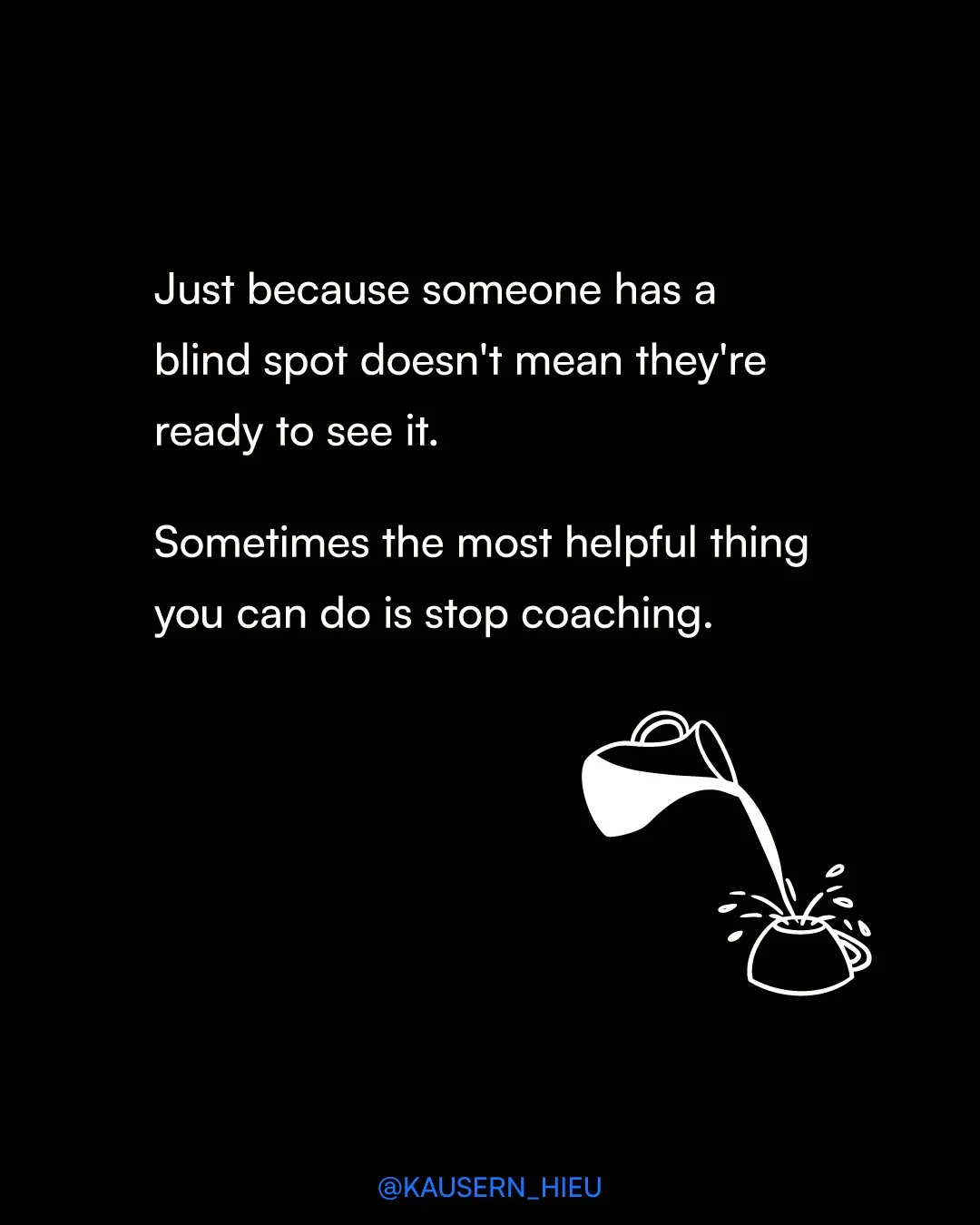
Just because someone has a blind spot doesn’t mean they’re ready to see it
I discovered the dark side of coaching recently.
A friend was sharing a challenge she was facing. As she spoke, I could see what seemed obvious to me: the issue wasn't really the issue.
Like an iceberg, there was something deeper beneath the surface driving the decisions she was making. So, I did what I've been trained to do.
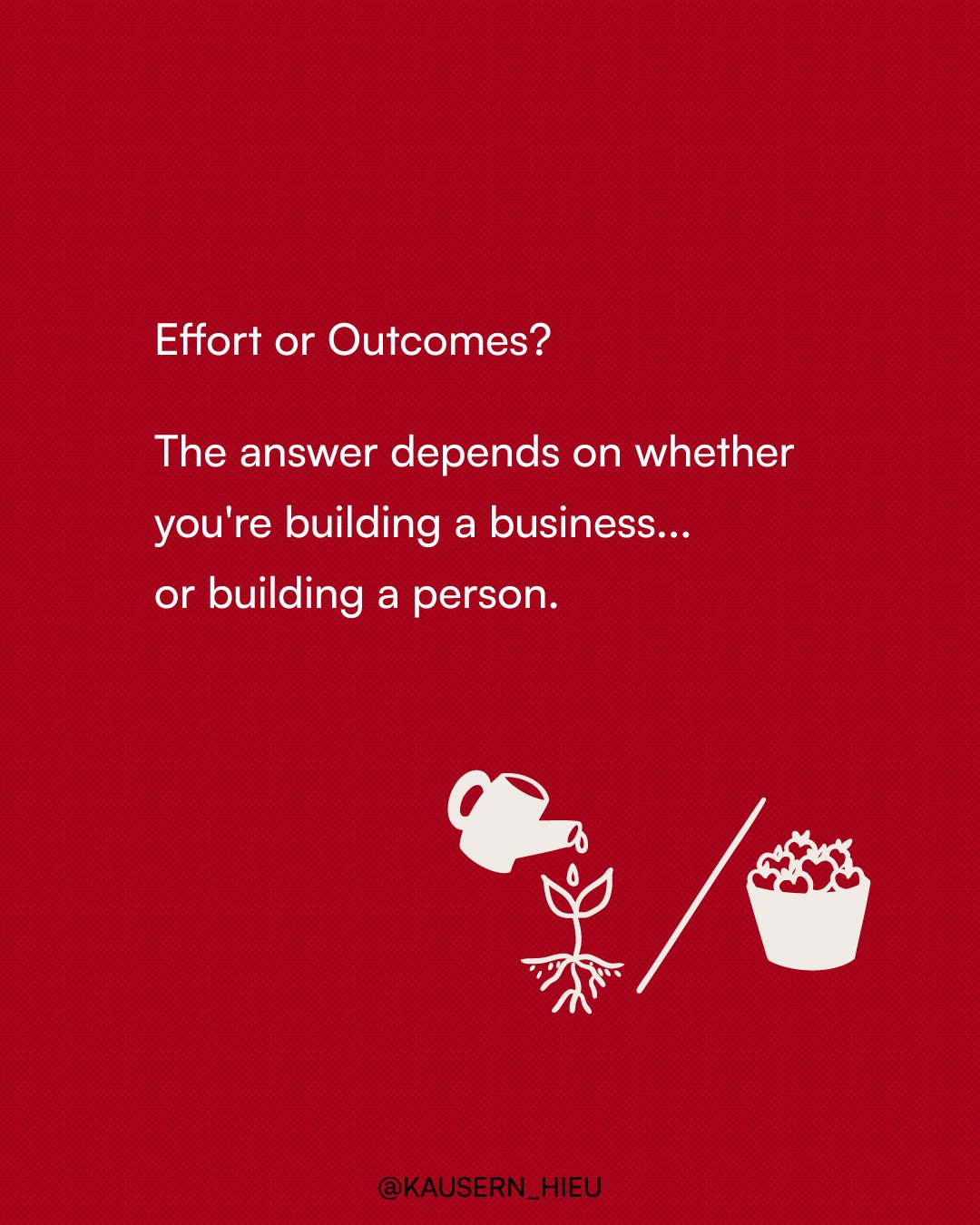
Effort or outcomes?
Which is more important: effort or outcomes?
If you're building a business, the answer is usually outcomes. Customers don't care how hard you work. They care whether you solve their problems. The market rewards value, not effort.

Many solopreneurs hide behind content because posting feels safer than sales outreach
Many solopreneurs spend hours creating content but hesitate to reach out to potential clients.
I find myself more comfortable hiding behind content creation because it feels productive and emotionally safer than outreach.
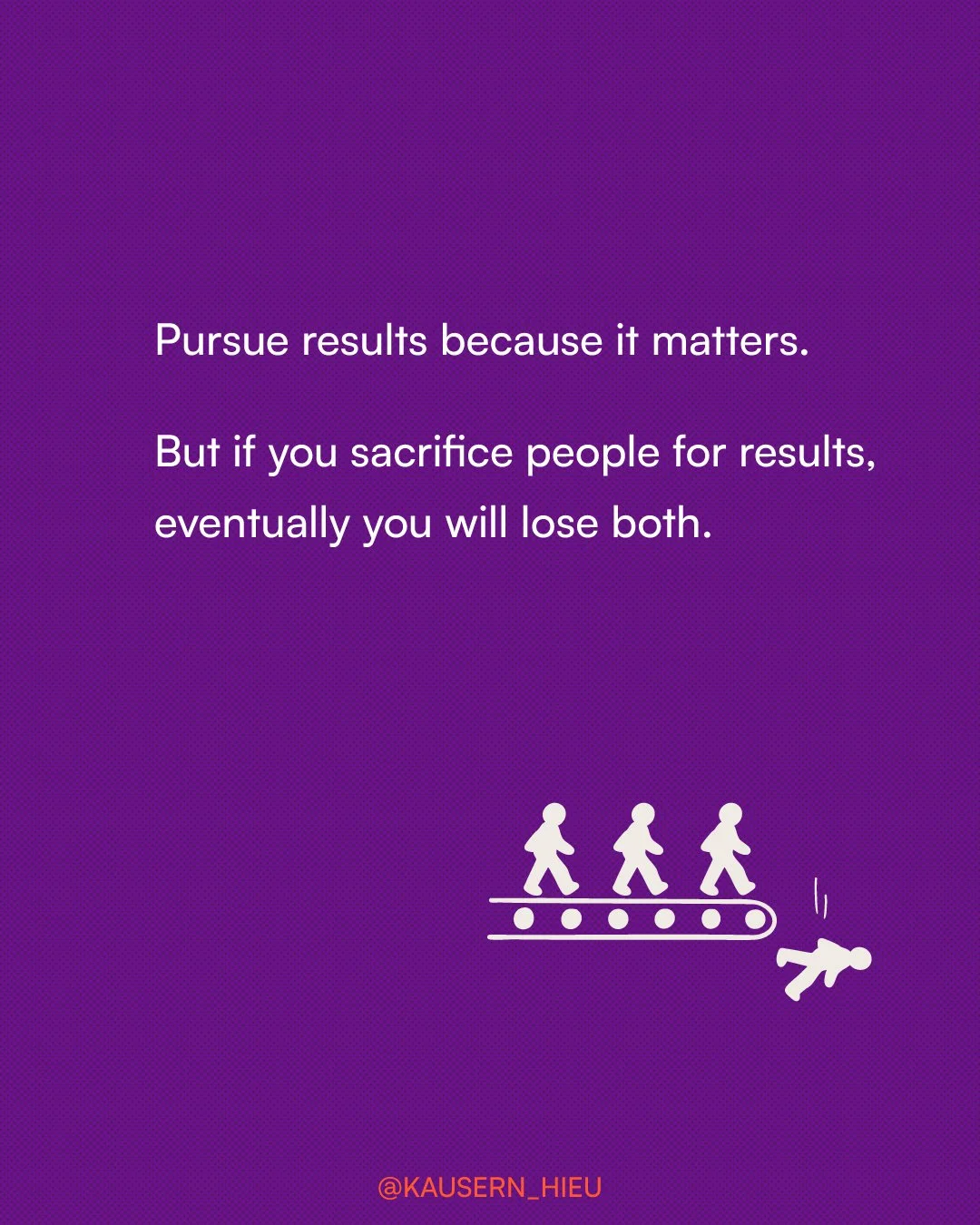
Pursue results because it matters
Results and people are not opposing priorities in leadership.
Firstly, leaders shouldn’t feel guilty about achieving results. Effective leaders pursue high standards, accountability and performance.
Life is less orchestra, more jazz
Black-and-white (Dichotomous) thinking can feel decisive, but it could be dangerous.
Black-and-white thinking is the habit of seeing life in extremes.
At its core, it assumes only two options exist:
Right or wrong. Success or failure. Strong or weak.
If what you stand for doesn’t risk disapproval, it’s probably not a stand
“If you don’t stand for something, you will fall for anything”… goes the saying.
Indeed, it’s important to stand for something in life. It sounds powerful and even romantic - until it asks something from you.
One of the most underrated storytelling skills is truly knowing who’s listening
If you’re goal-driven and hard on yourself, this might resonate.
Most people think storytelling is about being engaging.
But here’s what I’ve been reminded time and time again, especially when my presentations or training sessions didn’t land:
🤝 “Connection before content”.
A lack of applause is not a lack of success
If you’re goal-driven and hard on yourself, this might resonate.
Sometimes, it just means the results aren’t visible yet.
Keep building.
However, I was once asked:
“Would you still pursue this if nobody ever clapped for you?”
That question stayed with me.
Most high performers struggle with this
If you’re goal-driven and hard on yourself, this might resonate.
You set targets. You push hard. You expect results. And when you don’t hit them on time, the self-talk kicks in:
“I should have…”
“What’s wrong with me?”
“Maybe I’m not good enough.”
I know this pattern well.
You’re exactly where you’re supposed to be right now
Nothing you’ve been through is wasted, if you’re willing to learn from it.
I didn’t always see it that way.
There was a life-changing chapter in my life a decade ago that forced everything to the surface. And what it revealed was uncomfortable.
Before you lead change, ask with curiosity to truly listen, learn & understand.
Just the other day, I heard a familiar narrative: “Women make better leaders.”
The reasons often cited?
Empathy. Organisation. Being people-centric. Results-driven.
Women aren’t better leaders. Men aren’t either
Just the other day, I heard a familiar narrative: “Women make better leaders.”
The reasons often cited?
Empathy. Organisation. Being people-centric. Results-driven.
Perfectionism will f**k with your mind
I recently heard a commencement speech by Roger Federer where he shared something surprising. Even at the highest level of tennis, he only won about 54% of the points he played.
Life is happening through you
Some years ago, I went through a major life event that shook me deeply. It felt like my world had collapsed. It shattered my self-identity.
For a while, I lived with the question:
“Why is this happening to me?”
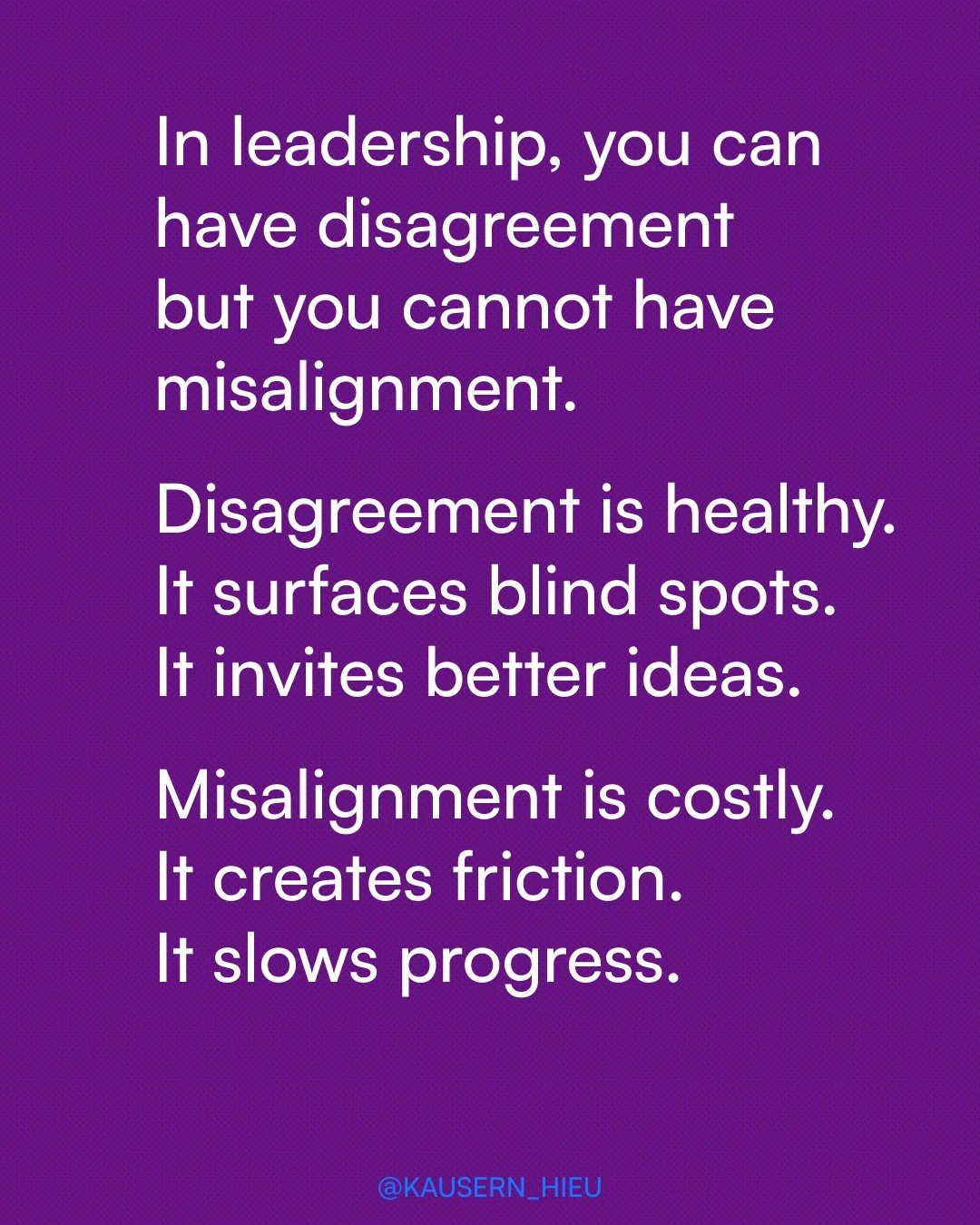
In leadership, you can have disagreement
I’ve been reflecting on what leadership really comes down to.
Whether leading teams, coaching leaders, or building my own business, I’ve noticed that most problems aren’t capability problems.
They’re alignment problems.
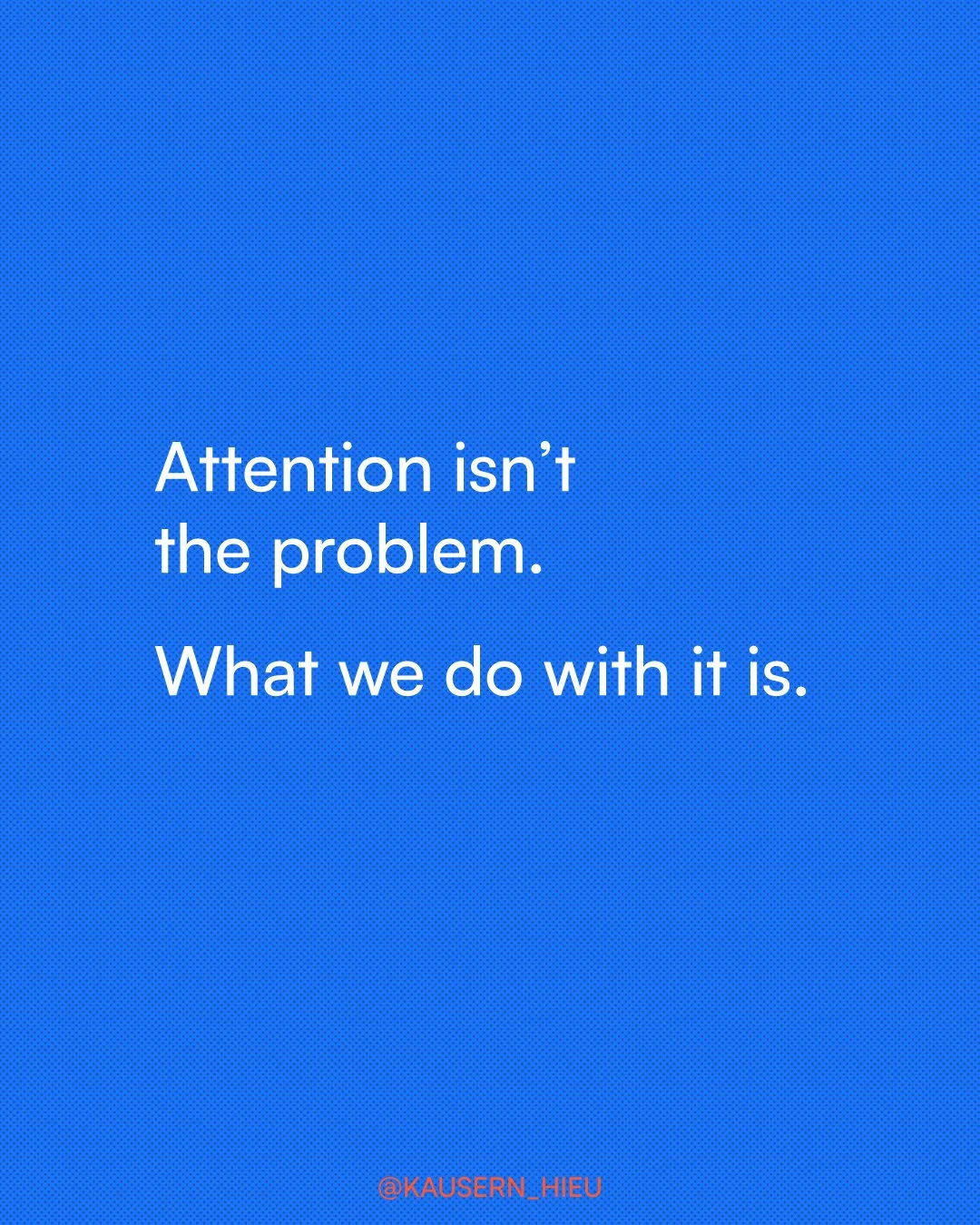
Attention isn’t the problem
Lately, I’ve been noticing a tension within myself.
One part of me wants to step forward to be more visible: to share ideas, to influence, to make a difference. But another part is pulling the brakes: “Be careful. Don’t look like you’re seeking attention.”
Both voices feel true.
Here’s why I’m even talking about this.