
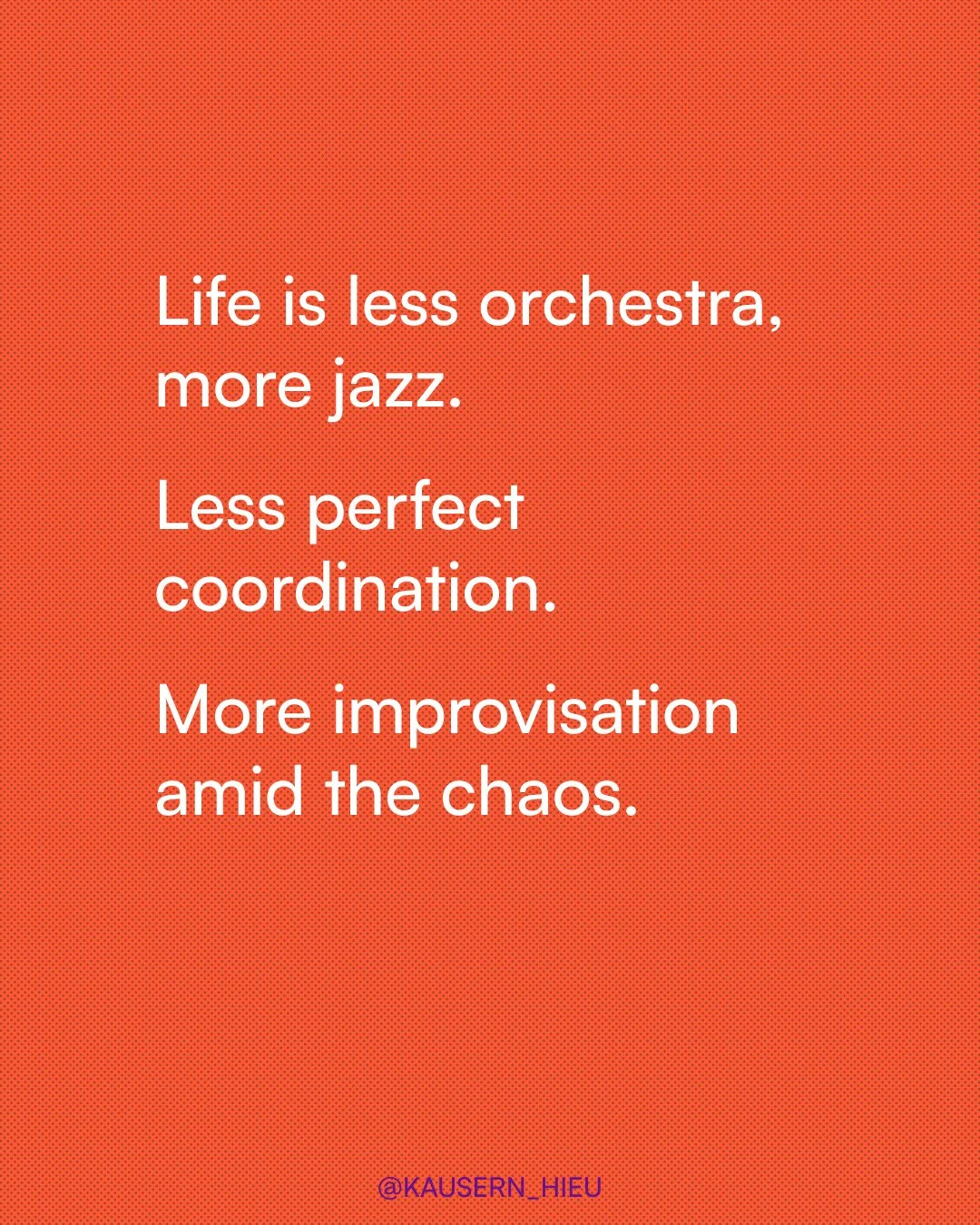
Life is less orchestra, more jazz
Black-and-white (Dichotomous) thinking can feel decisive, but it could be dangerous.
Black-and-white thinking is the habit of seeing life in extremes.
At its core, it assumes only two options exist:
Right or wrong. Success or failure. Strong or weak.
The problem?
Life, relationships, and leadership rarely live at the extremes. They live in a rich canvas of many shades of grey.
It is more nuanced.
When we apply a binary thinking frame to view the world, it creates rigidity. And rigidity usually breaks under the complexity of life.
For example, if your only options are “I nailed it” or “I failed,” such thinking could fuel anxiety, imposter syndrome, and perfectionism. It could even lead to depression i.e.. “If I don’t nail this, I’m a failure.”
I’ve seen leaders struggle because they believed they had to choose between:
→ Delegate or stay hands-on
→ Be empathic or drive performance
→ Structure or flexibility
→ Confidence or humility
I know I have. And I still do.
Here’s a more practical framing for you (especially as a leader).
Instead of asking:
“Which is right?”
Train yourself to ask:
“What truth does each side hold. There is more than one option. How can I design a better third option?”
Mature thinking is rarely “either/or.”
It is “both/and.”
A wise leader knows:
→ You can be compassionate and demanding.
→ Visionary and grounded.
→ Patient and urgent.
In conclusion, the goal is not to eliminate tension. The goal is to learn how to jazz with it.
Meaning: You can hold structure and spontaneity together.
So, train yourself to listen deeply, adapt in real time, and build harmony from tension and contrast. You don’t have to choose one extreme. Instead, learn to integrate multiple truths at once.
Contributor: Kausern Hieu